Motors are used in electronic stage hoists for lifting and transporting heavy stage and concert equipment and props around a theatre or venue. Motors are needed as theatrical plays and concerts often involve the use of equipment that is too heavy or bulky to be lifted manually, and so motors are especially useful when props need to be moved quickly.
As a rule, there are two characteristics which define chain hoist motors â?? the power type and the lifting medium. The medium for lifting in the most common type of stage motor system is a load-chain, although rope and wire are also used (usually in older staging hoist systems). Motors work by pulling the lifting medium through a pulley.
A motors power can be provided by a number of different means. Electrical, hydraulic and even air-driven motors are all fairly common. While the rope and chain stage hoist has been around for hundreds of years, electric stage hoists and motors are fairly recent inventions and have only been common for the last 80 years or so.
Several different types of motors are available. Single speed and two-speed motors are the most common types, and these come in several different lifting capacity ratings, from 1/8 tons all the way up to 3 tons and even higher with some specialized motors.
The range of lift is also another factor in choosing your stage hoist â?? most single speed motors have a lifting range of between 10 and 20 feet, whereas two-speed motors usually only have 10 feet of lift.

The Coffing UJC is designed to meet the toughest rigging applications in the entertainment industry. Whether flying truss for lighting and sound or moving sets and backdrops the UJC is a tought act to follow. Lightweight, compact and quiet the Coffin...
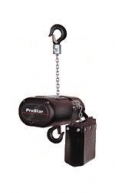
The Coffing Prostar models are designed and built for the unique rigging applications encountered at small venues. Lightweight, quiet and portable, the Coffing Prostar features an overload device that protects the hoist, operator and structure from d...
The Coffing Half Ton is designed to meet the toughest rigging applications in the entertainment industry. Whether flying truss for lighting and sound or moving sets and backdrops this motor is a tought act to follow. Lightweight, compact and quiet th...
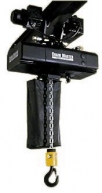
In their standard configuration, the single-pin design trolleys are equipped with safety devices for climbing and to prevent falling, and offer a load-bearing capacity of 1,000 to 5,000 kg. They are designed for soft starting, and thus operate extrem...
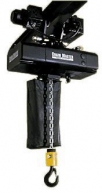
In their standard configuration, the single-pin design trolleys are equipped with safety devices for climbing and to prevent falling, and offer a load-bearing capacity of 1,000 to 5,000 kg. They are designed for soft starting, and thus operate extrem...
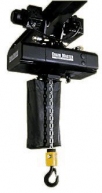
In their standard configuration, the single-pin design trolleys are equipped with safety devices for climbing and to prevent falling, and offer a load-bearing capacity of 1,000 to 5,000 kg. They are designed for soft starting, and thus operate extrem...
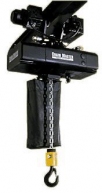
In their standard configuration, the single-pin design trolleys are equipped with safety devices for climbing and to prevent falling, and offer a load-bearing capacity of 1,000 to 5,000 kg. They are designed for soft starting, and thus operate extrem...
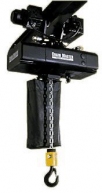
In their standard configuration, the single-pin design trolleys are equipped with safety devices for climbing and to prevent falling, and offer a load-bearing capacity of 1,000 to 5,000 kg. They are designed for soft starting, and thus operate extrem...
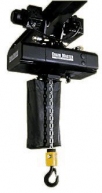
In their standard configuration, the single-pin design trolleys are equipped with safety devices for climbing and to prevent falling, and offer a load-bearing capacity of 1,000 to 5,000 kg. They are designed for soft starting, and thus operate extrem...
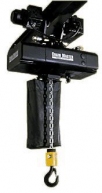
In their standard configuration, the single-pin design trolleys are equipped with safety devices for climbing and to prevent falling, and offer a load-bearing capacity of 1,000 to 5,000 kg. They are designed for soft starting, and thus operate extrem...